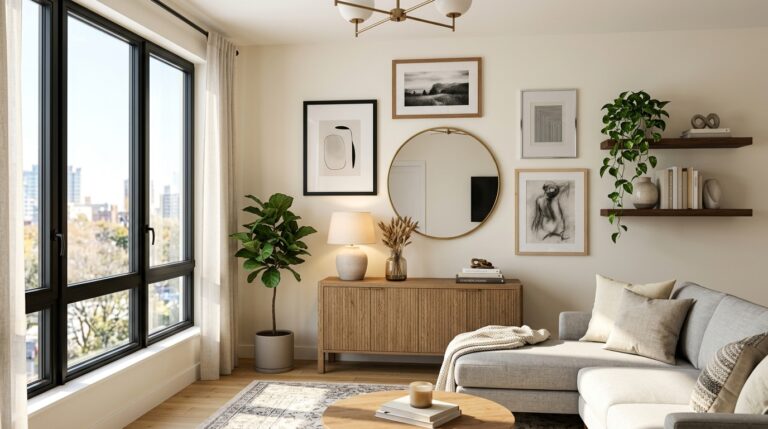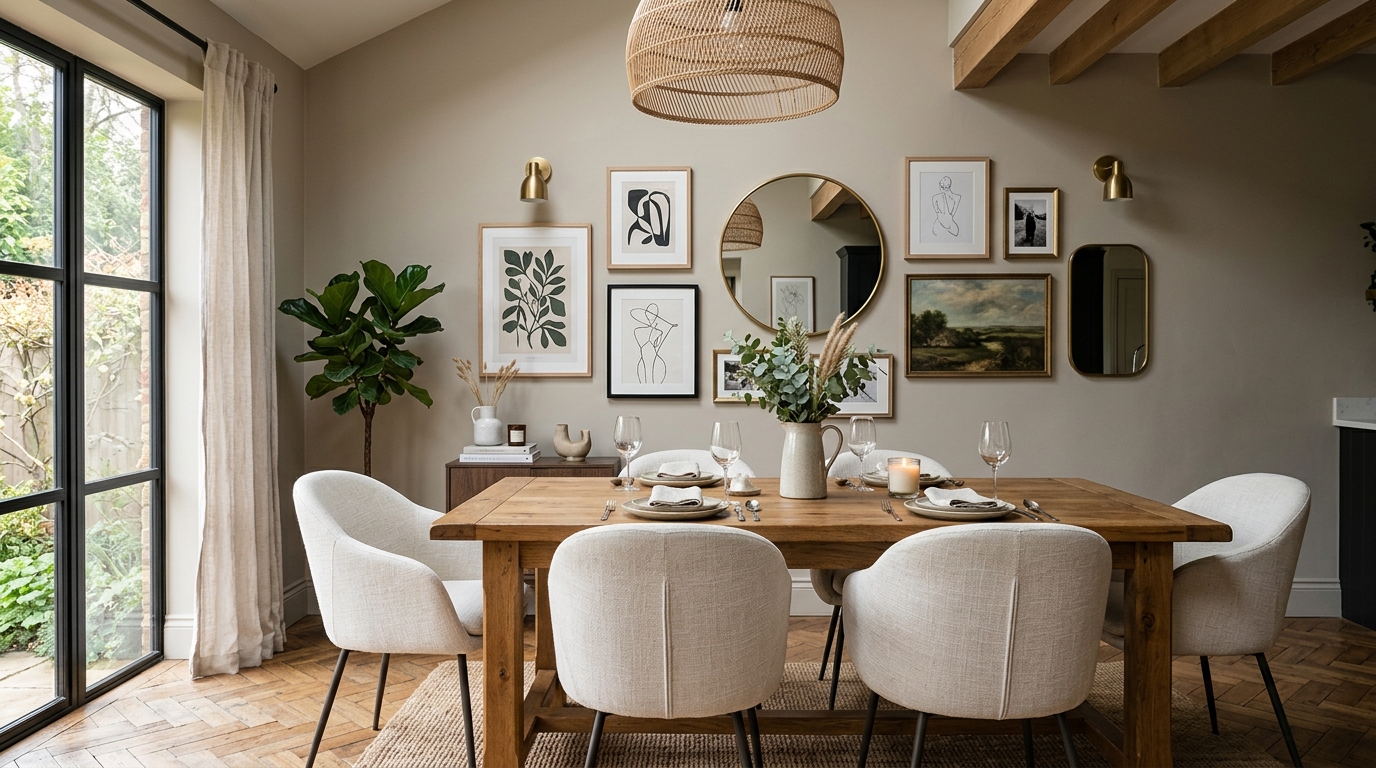
20 Dining Area Wall Decor Secrets Interior Designers Don’t Share
Your dining area walls can quietly shape the entire mood of your home. A blank wall often feels unfinished, while a thoughtful setup can make even a small space feel warm and complete. You don’t need expensive pieces or a designer budget. With a few smart choices and simple DIY ideas, you can create a dining space that feels personal, stylish, and practical. The ideas below focus on real-life solutions you can actually try, using affordable materials and easy styling tricks that make a visible difference.
Create a Balanced Gallery Wall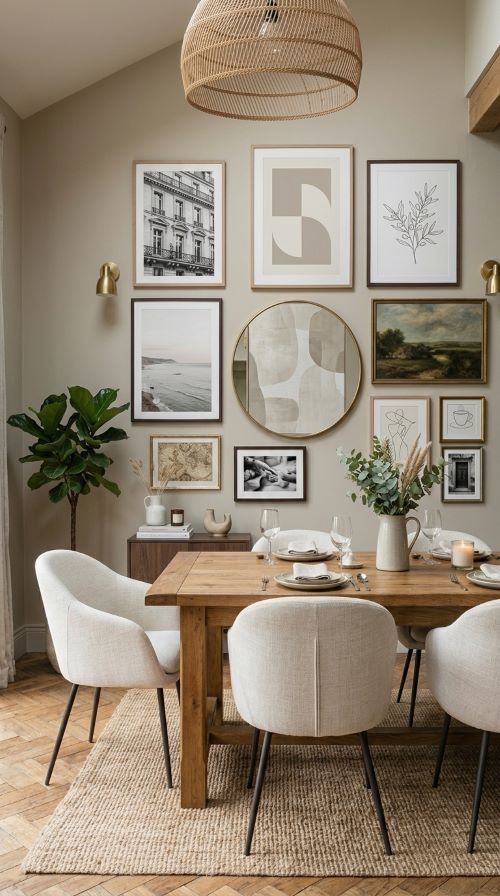
[Image Prompt: A dining wall arranged with mixed-size frames in neutral tones, featuring art prints and photos, evenly spaced above a wooden dining table, soft natural lighting, high-end camera detail, no text.]
A gallery wall is one of the easiest ways to give your dining area personality without spending much. Start by collecting frames you already own. Mix different sizes, but keep colors similar so it looks cohesive. Lay everything on the floor first to test your layout. This step saves time and avoids unnecessary holes in your wall. Keep spacing consistent, about two to three inches between frames. Use printed quotes, family photos, or even magazine cutouts for budget-friendly art. If you want a clean look, stick to black, white, or wooden frames. For a relaxed vibe, mix textures and colors. Command hooks work well if you don’t want to drill. A gallery wall doesn’t need to be perfect. Slight variation adds charm. Keep the center of the arrangement at eye level when seated. That makes the display feel connected to your dining experience. Add one standout piece in the middle to anchor everything visually. This simple setup can completely change how your space feels.
Hang a Statement Mirror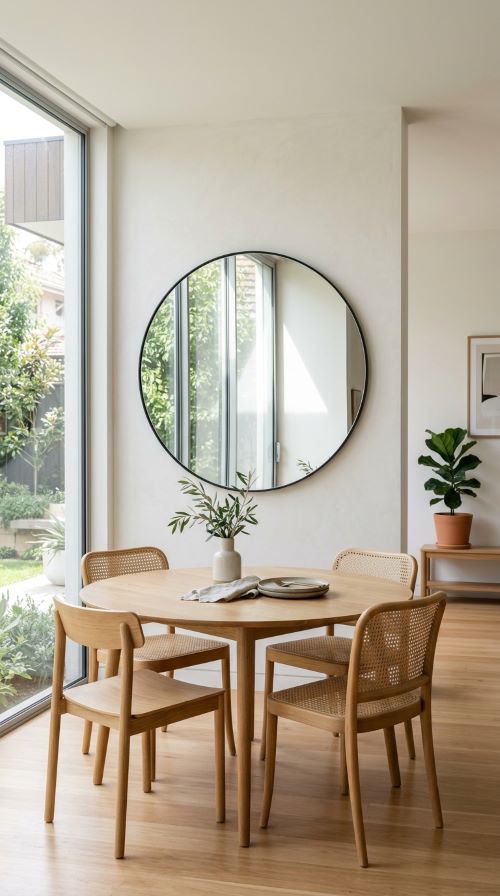
[Image Prompt: A large round mirror hanging above a dining table reflecting natural light, minimal decor around it, clean modern interior, high-end camera photography, no text.]
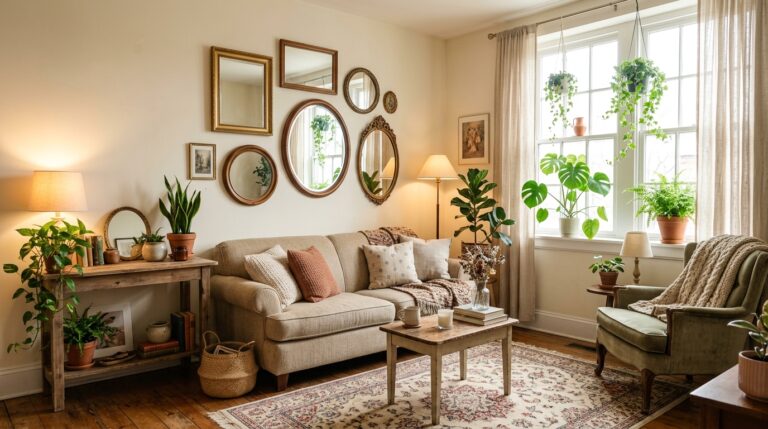
A mirror works like magic in a dining area. It reflects light and makes the room feel bigger without adding clutter. Choose a mirror that fits your wall size. A large round mirror works well for a modern look, while rectangular ones suit classic spaces. Hang it so it reflects something nice, like a window or a light fixture. Avoid placing it where it reflects messy areas. If you’re on a budget, check thrift stores or online marketplaces. You can repaint the frame to match your style. Gold spray paint gives an instant upgrade. Keep the surrounding wall simple so the mirror stands out. If your dining area is small, this trick can make a big difference. It creates depth without needing extra decor. You can also layer a small shelf below the mirror for candles or plants. That adds warmth without overcrowding the space.
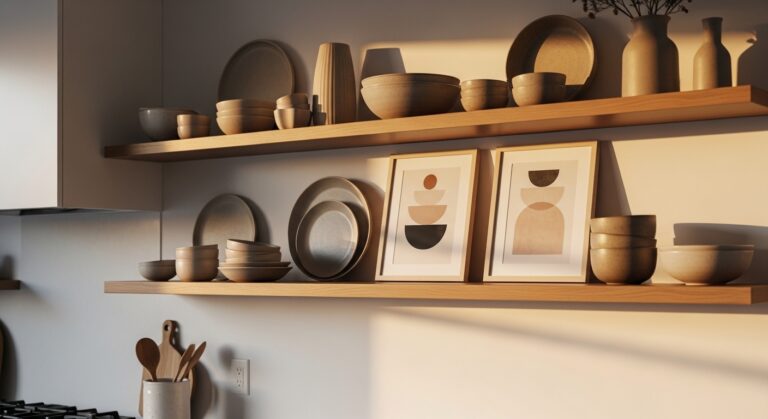
Add Floating Shelves for Styling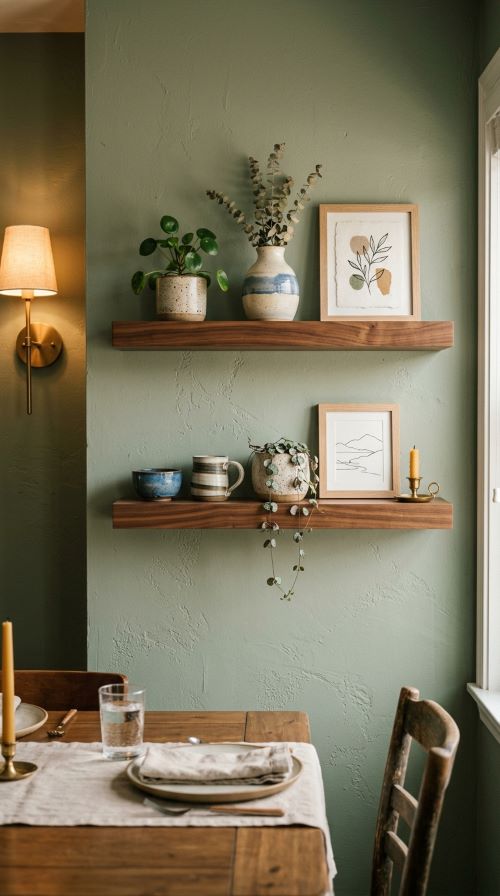
[Image Prompt: Wooden floating shelves on a dining wall styled with small plants, ceramics, and framed prints, warm lighting, high-end camera detail, no text.]
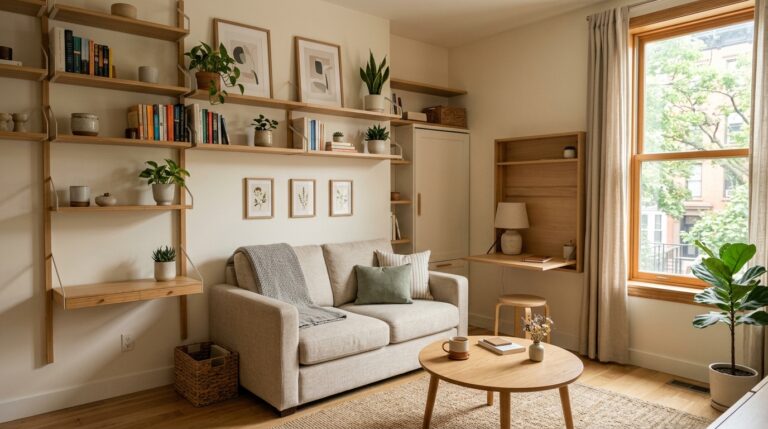
Floating shelves are both decorative and practical. They give you space to display items without taking up floor space. Choose simple wooden shelves for a clean look. Install two or three shelves, evenly spaced. Keep the styling light. A few small plants, candles, and framed prints are enough. Avoid overloading the shelves. Too many items can make the space feel messy. Mix heights and textures to create interest. For example, place a tall vase next to a stack of books. If you’re renting, use lightweight shelves that are easy to install and remove. You can also change the decor with seasons. Swap in warmer tones during winter and lighter pieces during summer. This keeps your dining area feeling updated without buying new furniture. Floating shelves are also great for small apartments where storage is limited.
Use Oversized Art for Impact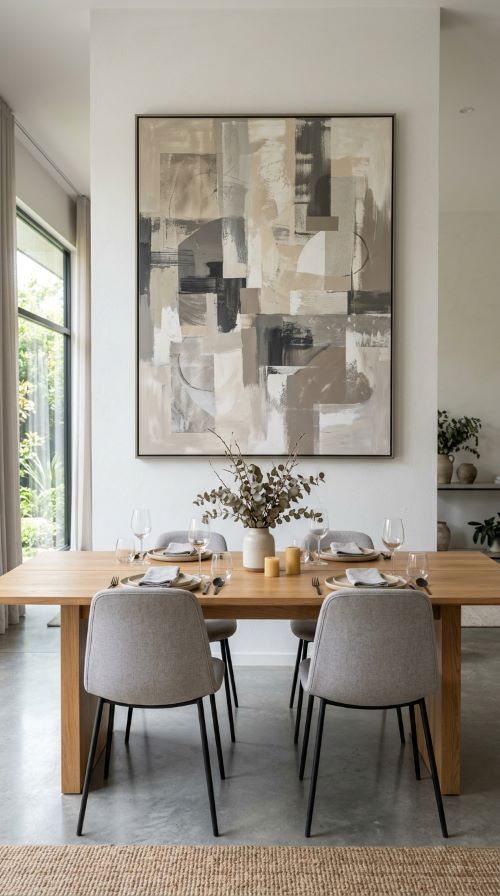
One large piece of art can make a stronger impact than many small ones. It keeps the wall clean while still adding character. Choose artwork that matches your dining room colors. Abstract prints work well because they’re easy to match. If original art is expensive, print a digital design on canvas. Many online platforms offer affordable options. You can even frame fabric or wallpaper samples for a similar effect. Hang the piece at eye level. Keep it centered above your dining table. This creates balance and focus. If your table is long, go for a horizontal piece. For round tables, square or circular art works better. Keep surrounding decor minimal so the artwork stands out. This approach saves money and still looks polished.
Try a Painted Accent Wall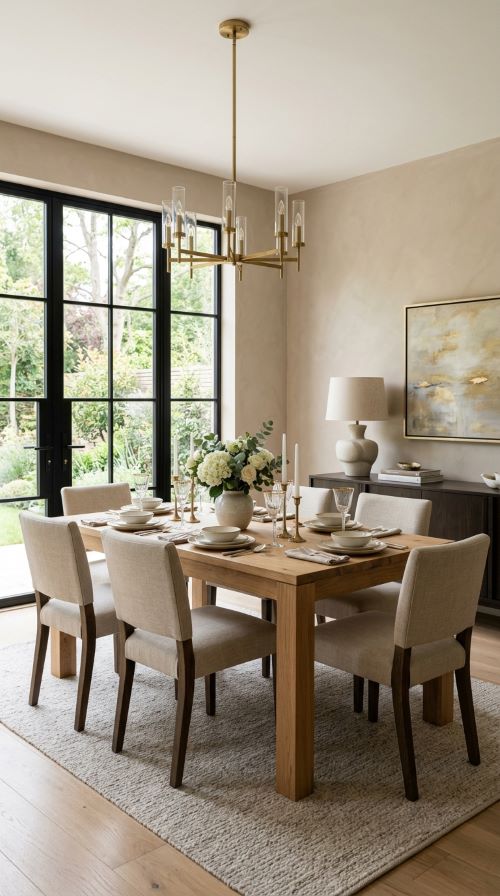
Paint is one of the cheapest ways to change a space. An accent wall adds depth without needing decor. Choose a color that complements your furniture. Soft greens, warm beige, or muted blue tones work well in dining areas. You don’t need to paint the whole room. One wall is enough. Use painter’s tape for clean edges. If you want something different, try color blocking. Paint half the wall or create geometric shapes. This adds visual interest without extra cost. Matte finishes hide imperfections better than glossy ones. Keep the rest of the decor simple so the color stands out. This is a great option if you prefer a minimal look but still want character.
Frame Everyday Objects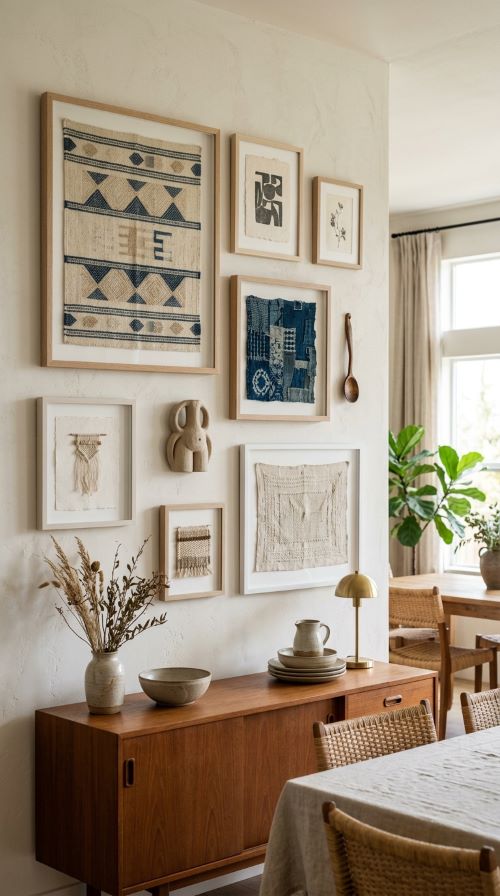
You don’t always need traditional art. Everyday items can look beautiful when framed. Think fabric pieces, handwritten notes, or even pressed leaves. Use simple frames to keep the focus on the item. This idea is budget-friendly and personal. Arrange them in a neat grid for a clean look. Or place them in a loose layout for a relaxed feel. This approach adds meaning to your space. It tells a story without being expensive. It’s also easy to update. Swap items whenever you want a change. This keeps your dining area feeling new without spending much.
Install Wall Lighting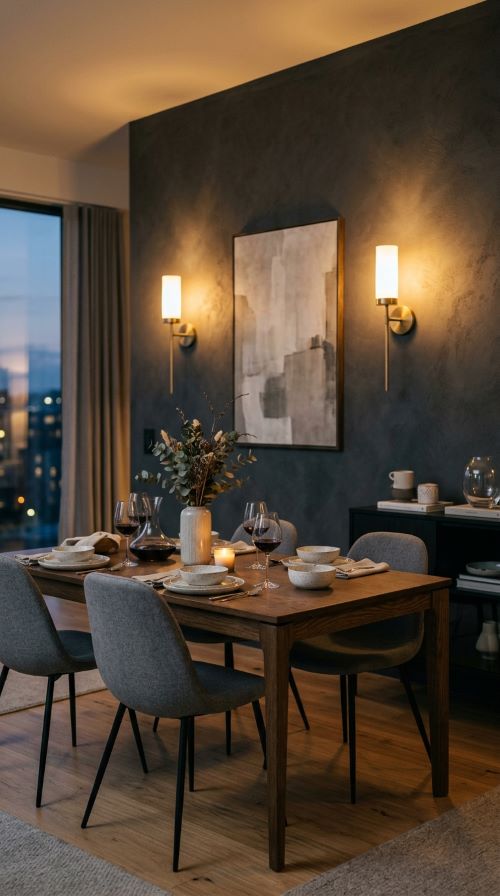
Wall lighting adds both function and style, and it can completely reshape how your dining area feels at night. Instead of relying only on overhead lights, wall sconces create a softer, more relaxed glow that feels comfortable during meals. If you don’t want to deal with wiring, plug-in sconces are a simple option. You can mount them with basic tools and even move them later if needed. Place them on either side of a mirror, artwork, or even a plain wall to create balance. This symmetry makes the space feel more put together without extra effort. Use warm-toned bulbs to create a cozy mood. Cool white lighting can feel harsh and uninviting in a dining setting. If you want more flexibility, choose dimmable bulbs so you can adjust brightness based on the time of day. For a budget-friendly idea, look for second-hand fixtures and refresh them with spray paint. Even small lighting changes can make your dining area feel more comfortable and welcoming.
Add a Wall Mural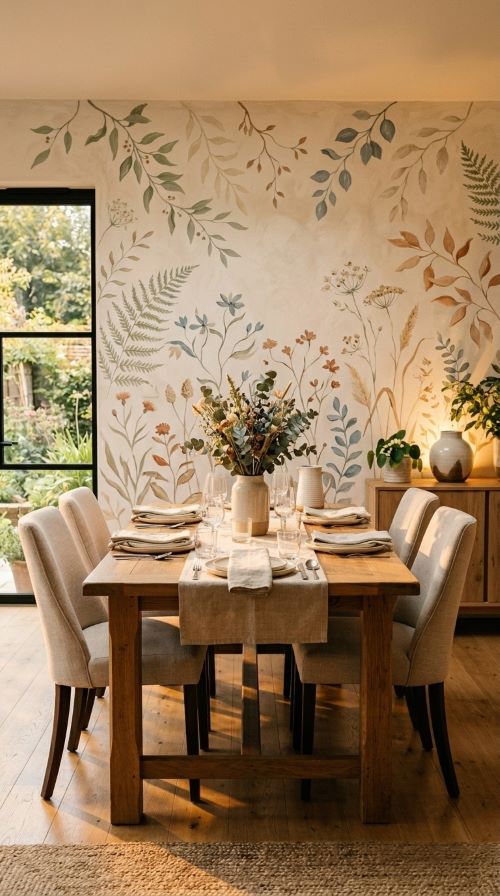
A wall mural can turn a simple dining area into a space that feels more personal and expressive. It doesn’t have to be complex or expensive to look good. Simple shapes, soft lines, or botanical patterns can create a strong visual effect without overwhelming the room. If you enjoy DIY projects, you can paint your own mural using painter’s tape and stencils. Start with light pencil outlines and build slowly with paint. Choose colors that match your furniture so everything feels connected. If painting feels like too much work, peel-and-stick decals are a great alternative. They are easy to apply and remove, making them perfect for renters. A mural works best as a focal point, so keep the surrounding decor minimal. Let the wall do most of the talking. This approach adds character without clutter and gives your dining space a unique look that stands out.
Use Plates as Wall Decor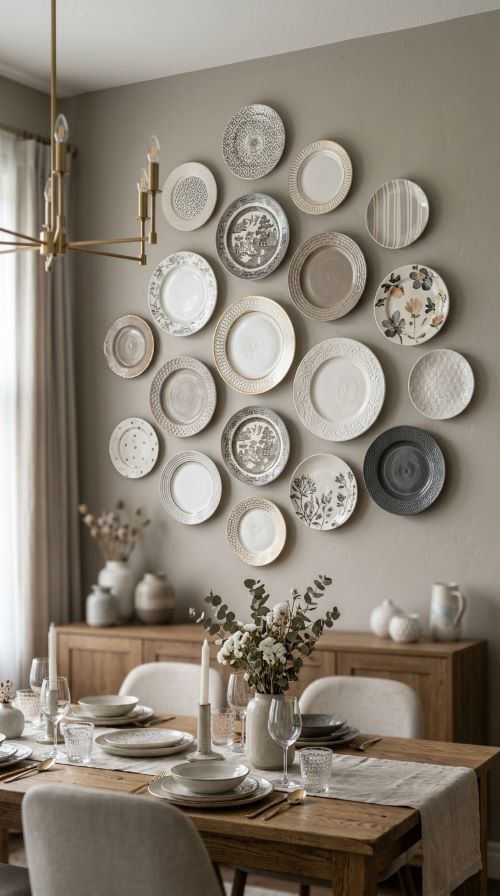
Decorative plates can add charm and personality to your dining area in a way that feels both classic and creative. You don’t need expensive sets to make this work. Thrift stores, flea markets, and even your own kitchen cabinets can provide pieces to start with. Mix different sizes to create variety, but keep a consistent color palette so the arrangement looks intentional. Soft blues, earthy tones, or simple white plates can create a calm and balanced display. Use inexpensive plate hangers or adhesive discs to mount them securely. Before hanging, lay out your arrangement on the floor to test different patterns. Circular layouts feel relaxed, while grid patterns look more structured. This type of wall decor adds texture and depth without needing frames or artwork. It also reflects your personal style in a subtle way. With a little planning, plates can become a standout feature in your dining space.
Hang a Tapestry or Textile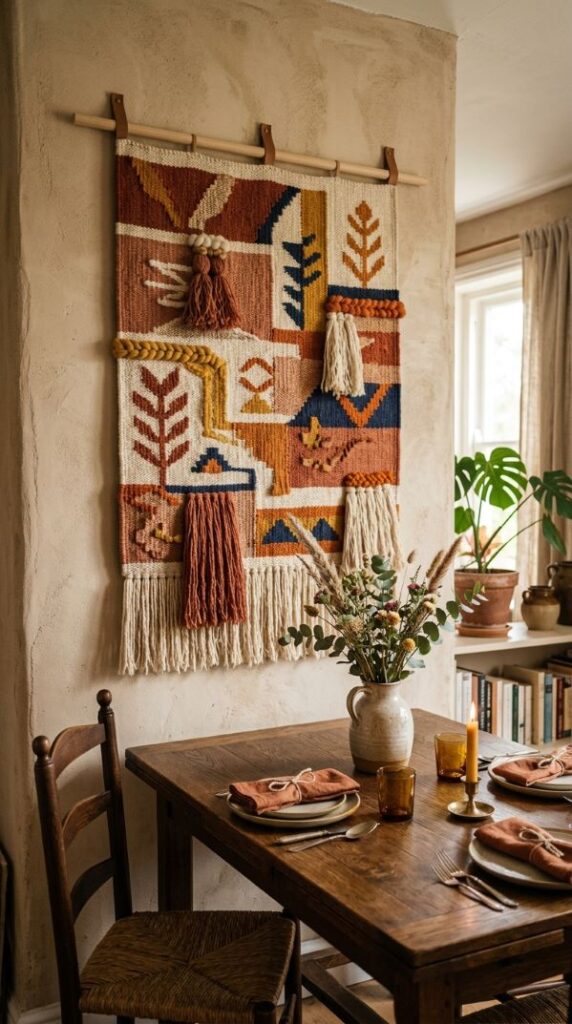
Textiles bring a softness to dining areas that hard surfaces sometimes lack. A tapestry or woven wall hanging can make the space feel warmer and more relaxed without needing a lot of effort. Choose fabrics with simple patterns or neutral tones if you want a calm look. For a more bold style, go for textured or patterned pieces that draw attention. Hanging a textile is easy. You can use a wooden rod, hooks, or even adhesive strips if the piece is lightweight. This makes it a great option for renters or anyone who doesn’t want to drill holes. Another advantage is flexibility. You can switch textiles seasonally to refresh your space without buying new decor. In cooler months, thicker fabrics add warmth, while lighter materials work well in warmer weather. This simple change can make your dining area feel more inviting and comfortable.
Create a Photo Ledge Display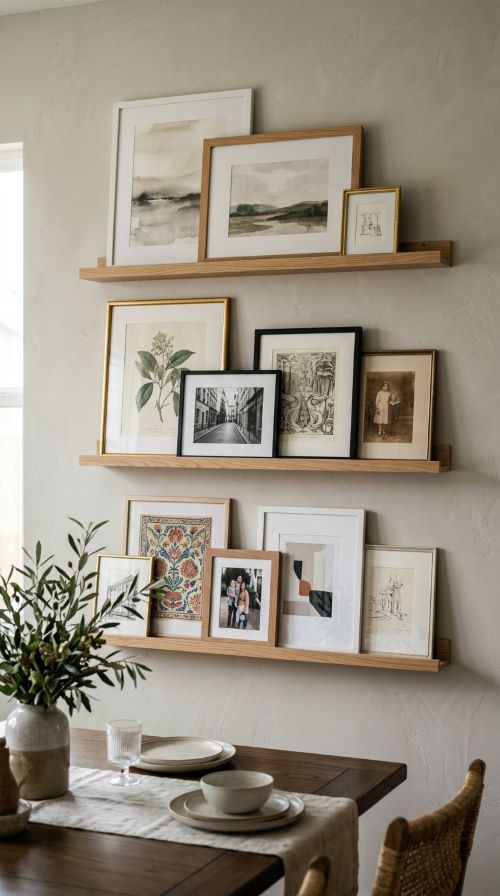
Photo ledges offer a flexible way to decorate your dining wall without committing to a fixed layout. Instead of hanging frames directly, you can lean them on narrow shelves. This makes it easy to swap out photos, artwork, or decor whenever you want a change. Install two or three ledges vertically to create depth. Keep spacing even so the arrangement looks clean. When styling, mix frame sizes and orientations. Combine photos with small decor items like candles or mini plants for added interest. Avoid overcrowding. Leave some space between items so each piece can stand out. This setup works especially well if you enjoy updating your decor often. You can rotate seasonal prints or family photos without needing tools. It’s a practical and budget-friendly way to keep your dining area feeling new and personalized.
Use Wallpaper Panels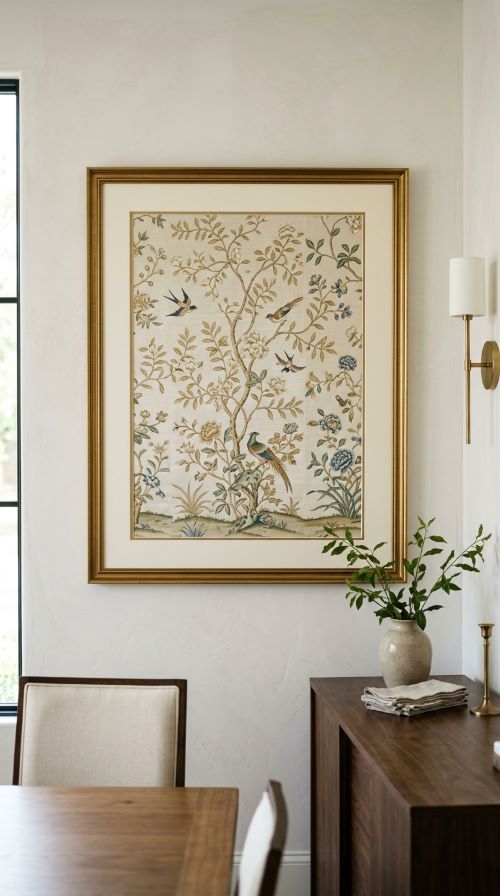
Wallpaper panels give you the look of detailed wall design without covering the entire space. Instead of applying wallpaper to a full wall, you can frame sections to create art-like displays. This approach saves money and reduces effort. Choose patterns that match your dining area colors. Subtle florals, geometric designs, or textured prints work well. Use simple frames to keep the focus on the pattern. You can also create panel shapes directly on the wall using trim or molding, then fill them with wallpaper. This adds a classic touch without major renovation. Peel-and-stick wallpaper is a great option if you want something easy to remove later. It’s especially helpful for renters. This method allows you to experiment with patterns in a controlled way while keeping your dining area neat and stylish.
Add Greenery with Wall Planters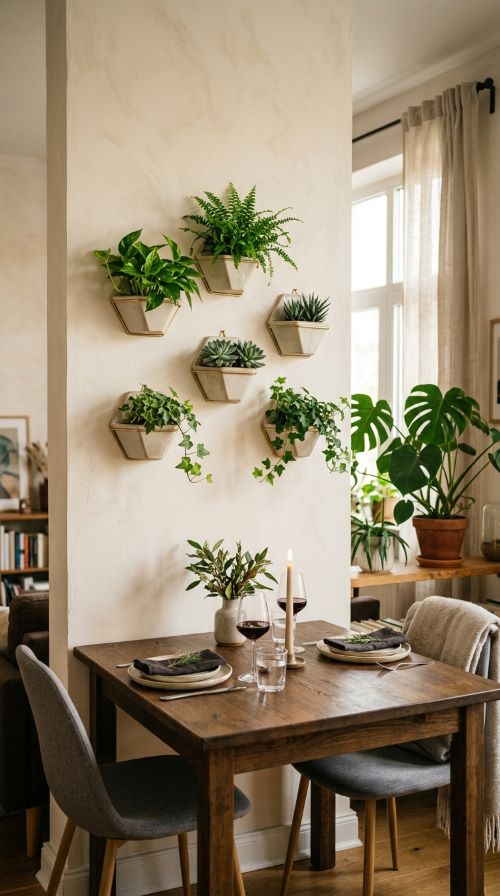
Wall planters bring natural elements into your dining area without taking up valuable space. They are perfect for smaller rooms where floor space is limited. Choose lightweight planters that are easy to mount. Arrange them in a simple pattern, such as a straight line or small cluster. Keep spacing even for a clean look. Select low-maintenance plants like pothos, snake plants, or small ferns. These are easy to care for and adapt well to indoor conditions. If real plants feel like too much work, high-quality artificial plants can still create a similar effect. The goal is to add a touch of green that softens the space. Plants can make your dining area feel more relaxed and welcoming. They also pair well with other decor styles, from modern to rustic, making them a versatile addition.
Display Minimal Clocks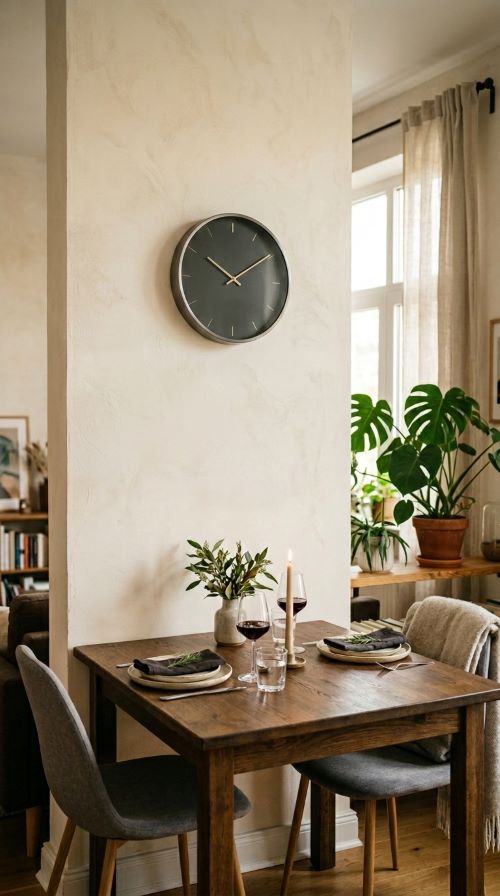
A wall clock can be both practical and decorative when chosen carefully. In a dining area, it should blend in rather than dominate the space. Look for simple designs with clean lines. Neutral colors like black, white, or wood tones work well with most interiors. Avoid overly detailed or colorful clocks that can distract from the overall look. Place the clock where it’s easy to see but not directly at the center of your wall if you already have a focal point. It can sit above a sideboard or slightly off-center above the table. This small addition adds function without clutter. It’s also helpful during meals or gatherings without needing to check your phone. A well-placed clock can quietly enhance your dining space.
Try Black and White Theme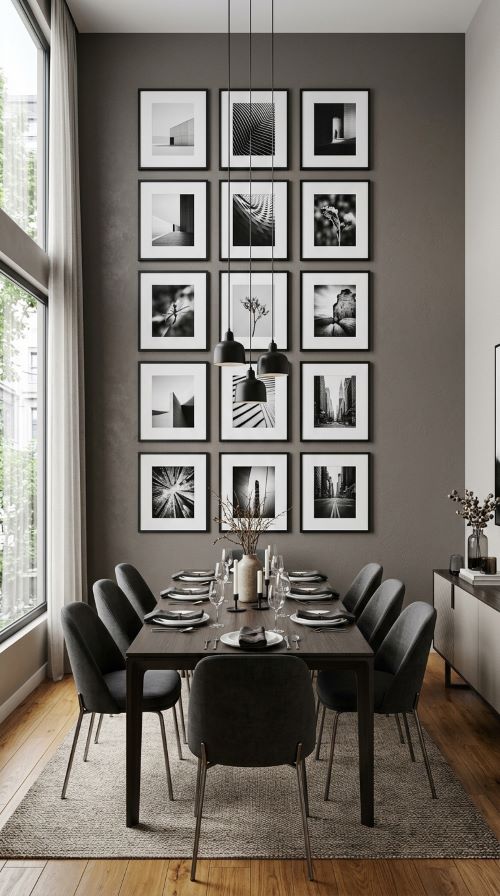
A black and white theme is a simple way to create a clean and timeless dining wall. It works well in both small and large spaces. Start with matching frames to keep the layout organized. Fill them with a mix of black and white photos, sketches, or printed designs. This creates contrast while keeping the look calm. Arrange the frames in a grid for a structured feel or in a loose layout for something more relaxed. The limited color palette makes it easy to maintain. You don’t need to worry about matching colors every time you add something new. This style also pairs well with different furniture types, whether modern or traditional. It’s an easy way to create a polished look without spending too much.
Hang Curtains as Wall Decor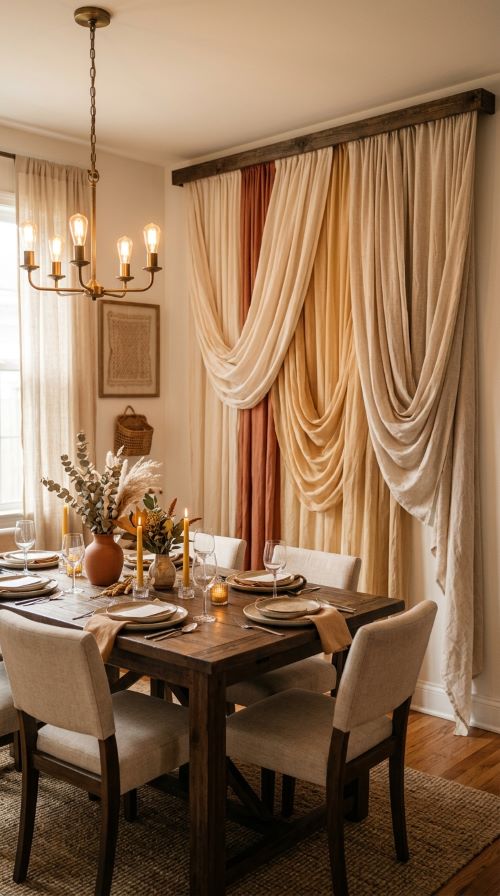
Using curtains as wall decor is an unexpected way to add softness and depth to your dining area. Instead of hanging them on windows, install a curtain rod on a blank wall. Choose lightweight fabrics for a relaxed feel. Sheer or cotton materials work well and allow light to pass through. This setup can make your wall feel taller and more spacious. It also adds texture without needing frames or artwork. You can layer different fabrics for a richer look or keep it simple with one panel. This idea is especially useful in small spaces where you want to avoid heavy decor. It’s also easy to change. Swap curtains based on seasons or mood to refresh the space without much effort.
Use Wood Panels for Texture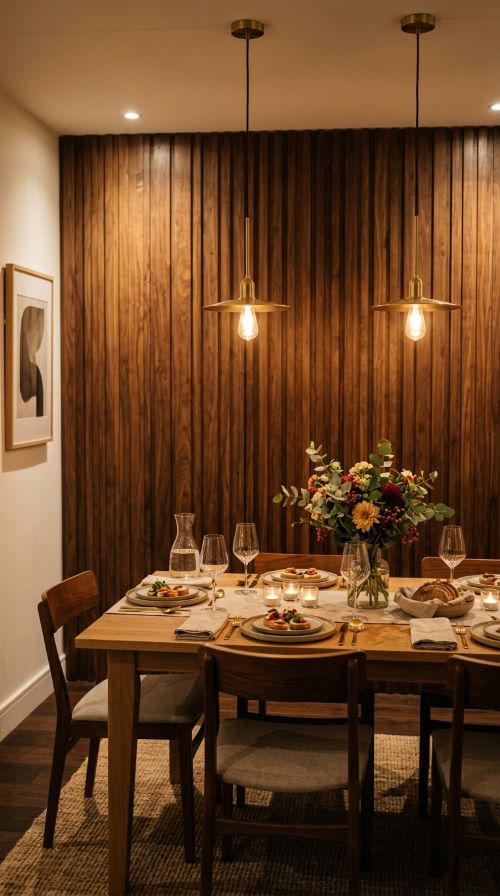
Wood panels can add warmth and structure to your dining area without requiring a full renovation. Peel-and-stick panels are a practical option if you want something simple to install. They come in different finishes, from light oak to darker tones, so you can match your existing furniture. Install them vertically to make your walls appear taller or horizontally for a wider look. Keep the rest of your decor minimal so the texture stands out. Wood adds a natural element that makes the space feel more comfortable. It pairs well with neutral colors and soft lighting. This approach works for both modern and rustic styles. With a small budget and a bit of time, you can create a feature wall that changes the entire feel of your dining space.
Add Personal Travel Displays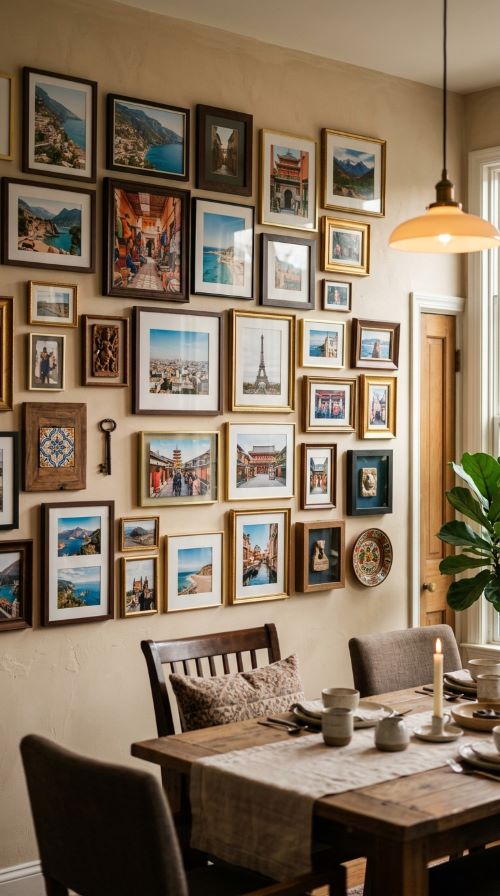
Travel displays bring meaning into your dining area by showcasing your experiences. Instead of generic art, use photos, postcards, or small souvenirs from places you’ve visited. Frame them neatly to keep the display organized. You can group items by location or mix them for a more relaxed look. Keep spacing consistent so the wall doesn’t feel cluttered. This type of decor tells a story and makes your space feel more personal. It also becomes a great conversation starter during meals. If you’re on a budget, print your own photos and use simple frames. You can update the display as you collect new memories. This keeps your dining area feeling alive and connected to your experiences.
Mix Metal Accents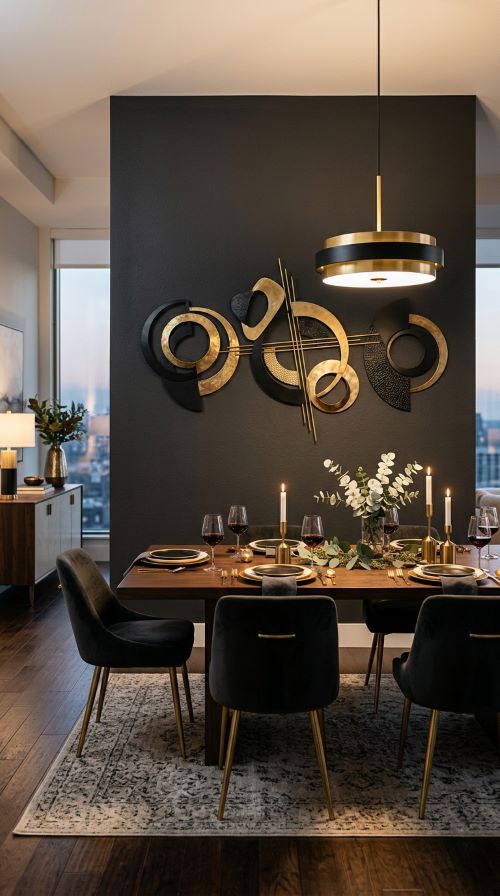
Metal accents can add a subtle shine to your dining wall without making it feel heavy. Small pieces work better than large ones. Think of simple metal frames, wall sculptures, or decorative shapes. Stick to a limited color palette like gold, black, or bronze. This keeps the look clean and balanced. Mix finishes carefully so they complement each other instead of clashing. Place metal pieces where they can catch light naturally. This creates a soft glow that adds depth to your space. Avoid overusing metallic elements. A few well-placed items are enough to make an impact. This idea works well with modern and industrial styles while still fitting into more classic spaces.
Keep One Wall Intentionally Empty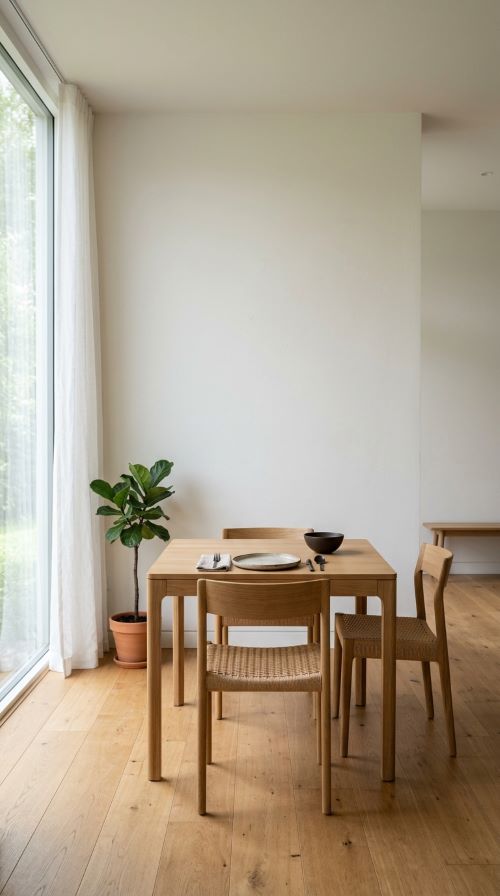
Leaving one wall empty might feel unusual, but it can actually make your dining area feel more calm and open. Not every surface needs decoration. An empty wall gives your eyes a place to rest and balances out other decorated areas. This works especially well in smaller spaces where too much decor can feel overwhelming. Pair the empty wall with simple furniture and good lighting. Natural light can highlight the clean look and make the space feel more open. If you ever feel like changing things, you can always add decor later. Starting with less gives you more flexibility. This approach keeps your dining area feeling simple, clean, and comfortable.
Final Words
Your dining area can feel warm and inviting without spending a lot of money or following complicated design ideas. Small changes like lighting, textures, and simple displays can reshape the entire space. Focus on ideas that are easy to try and match your daily life. You don’t need to do everything at once. Start with one wall, test a few ideas, and build from there. Over time, these small updates come together to create a dining area that feels personal, comfortable, and enjoyable for everyday meals and special moments.