11 Small Kitchen Ideas That Make Tiny Spaces Look Expensive
A small kitchen can still feel stylish, organized, and expensive-looking when the design choices are intentional. Limited space does not mean limited beauty. With the right balance of lighting, storage, color, and layout, even the tiniest kitchen can feel open and comfortable. The goal is to reduce visual clutter, use every inch smartly, and choose elements that reflect light and create flow. Small upgrades like shelving, lighting, and compact furniture can completely change how the space feels without requiring a full renovation. Each idea below focuses on practical, budget-friendly changes that work in real homes and small apartments. Whether you rent or own, these ideas can help you create a kitchen that feels cleaner, brighter, and more refined without adding unnecessary cost or complexity.
Glass Cabinet Doors
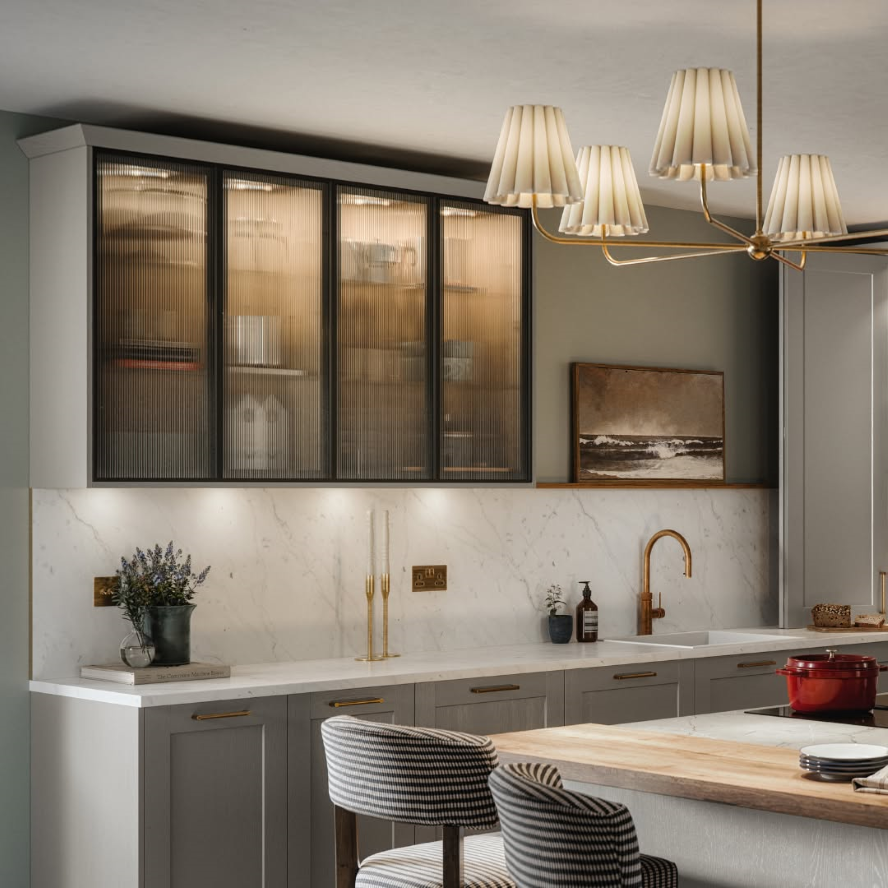
Glass cabinet doors are one of the easiest ways to make a small kitchen feel more open and expensive. Unlike solid cabinet fronts, glass allows light to pass through, which reduces the boxed-in feeling common in compact kitchens. This simple change creates depth, making the kitchen appear larger than it actually is. Clear glass works best if you like neat organization because everything inside is visible, so it encourages you to keep items arranged properly. Frosted glass is another option if you prefer a softer, more hidden look while still keeping the space visually light. A budget-friendly approach is replacing only the upper cabinet doors instead of the entire kitchen setup. Adding soft interior lighting inside the cabinets can further enhance the effect by creating a warm glow at night. Keeping a consistent color theme inside, such as white dishes or neutral ceramics, prevents visual clutter. This small upgrade improves both style and brightness without changing the kitchen layout.
Light Color Palette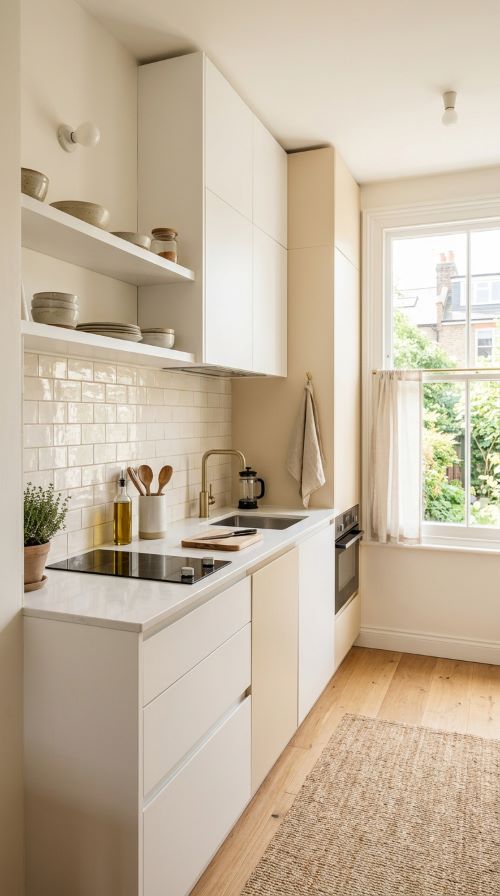
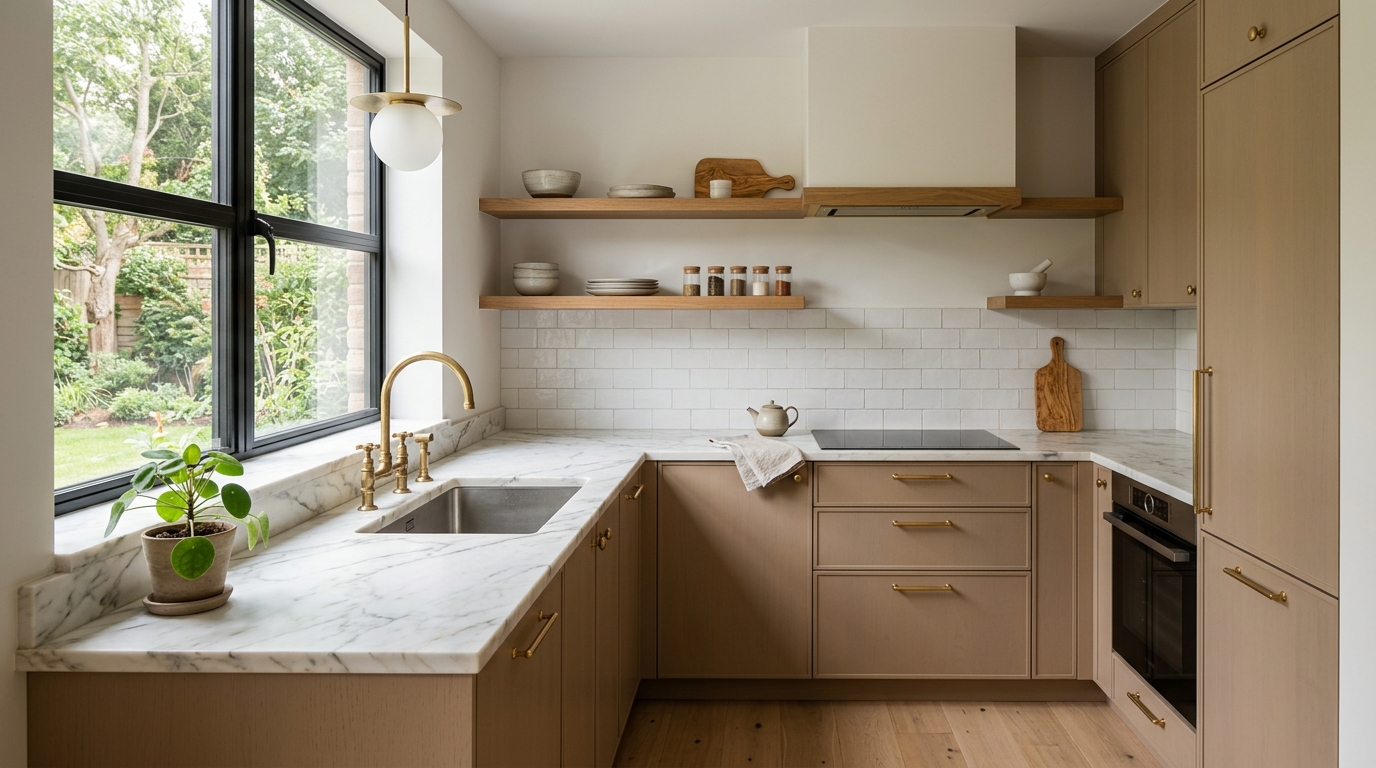
A light color palette is one of the strongest tools for making a small kitchen look bigger and more refined. Soft shades like white, cream, beige, and pale gray reflect light instead of absorbing it, which naturally brightens the space. This reflection helps walls and cabinets feel farther apart, creating a more open atmosphere. Dark colors can make tight kitchens feel even smaller, while lighter tones keep everything visually calm and balanced. Painting cabinets in soft matte white or warm ivory is a simple way to refresh the space without major renovation. If painting is not an option, changing wall color alone can still make a noticeable difference. Light countertops and backsplashes also help maintain a smooth visual flow. It is best to avoid using too many contrasting colors, as this can create visual noise in small spaces. Instead, sticking to two or three soft tones keeps the kitchen clean and structured. Adding natural textures like wood or woven baskets can add warmth without disturbing the light and airy feel.
Under-Cabinet Lighting
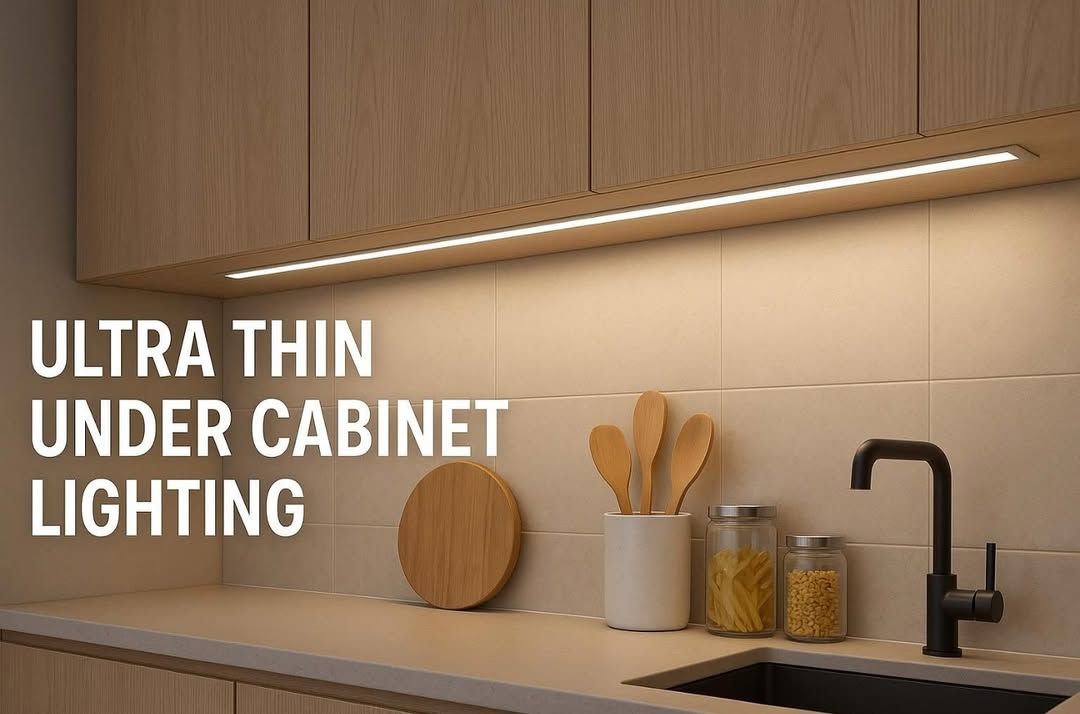
Under-cabinet lighting improves both function and appearance in a small kitchen. By placing lights under upper cabinets, the countertop becomes brighter and easier to use for cooking, chopping, and cleaning tasks. This reduces shadows that often make small kitchens feel tighter and less practical. LED strip lights are the most popular option because they are affordable, energy efficient, and easy to install without professional help. Warm white lighting creates a cozy atmosphere, while cool white gives a sharper, modern look depending on your preference. For renters, battery-powered or plug-in options are ideal since they do not require permanent installation. Hiding wires along cabinet edges keeps the setup clean and organized. This lighting also adds a soft glow in the evening, making the kitchen feel welcoming even when not in use. When combined with reflective surfaces like glossy tiles or polished countertops, the brightness effect becomes even stronger. Under-cabinet lighting is a small upgrade that delivers a big improvement in both usability and visual appeal.
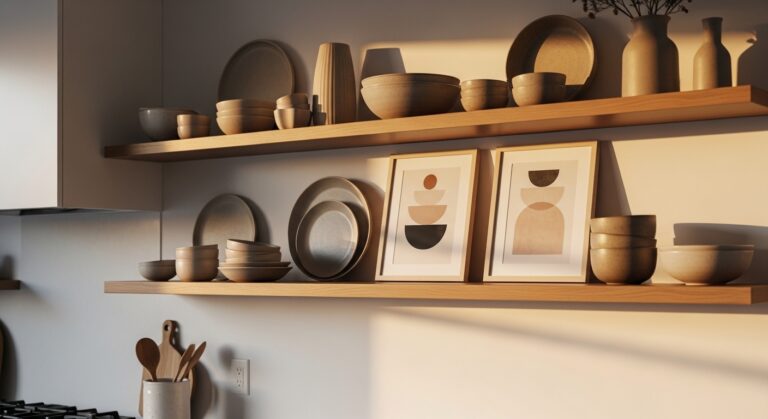
Floating Shelves
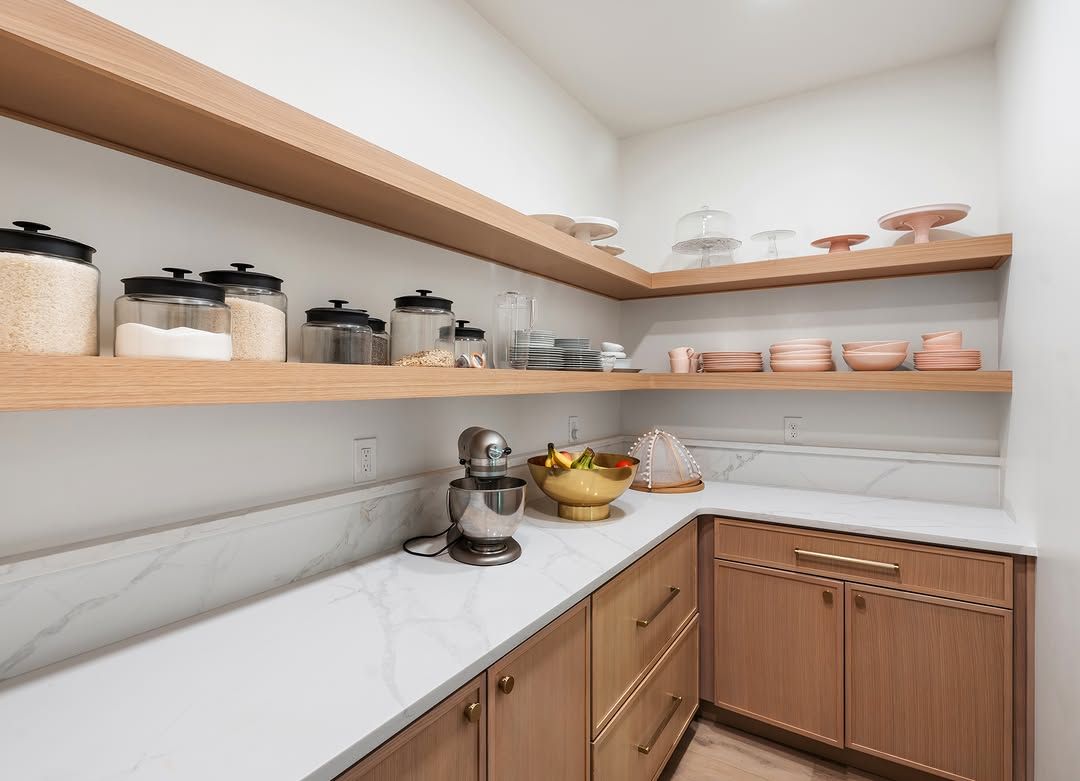
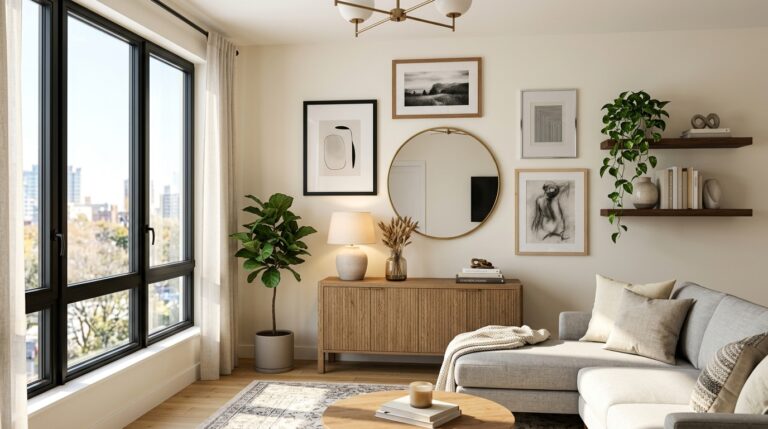
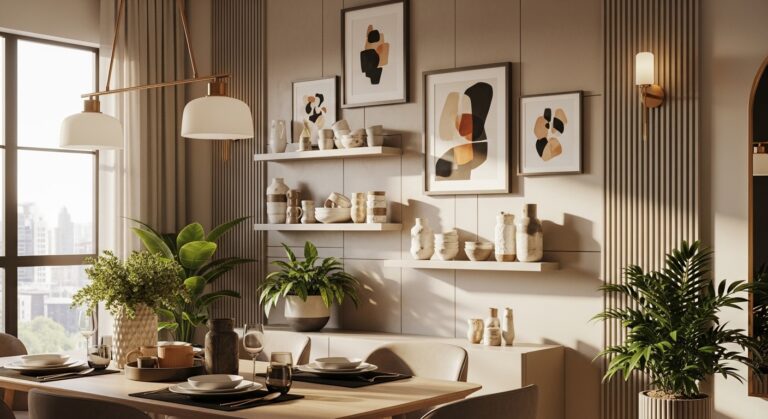
Floating shelves help open up wall space in a small kitchen while still providing practical storage. Unlike bulky upper cabinets, they keep the walls visually lighter, which helps the kitchen feel more spacious. These shelves are perfect for storing everyday items like plates, glasses, and spice jars while also adding a simple decorative touch. Wood shelves bring warmth, while metal brackets or hidden supports create a more modern and minimal appearance. The key is to avoid overcrowding them, as too many items can quickly create visual clutter. Leaving space between objects keeps everything balanced and easy on the eyes. A budget-friendly option is using basic wooden planks with simple wall brackets, which can be installed easily at home. Floating shelves also encourage better organization since everything is visible and accessible. Mixing open shelves with closed storage below helps maintain both display and hidden organization. This setup turns unused wall space into functional storage without making the kitchen feel heavy or closed in.
Compact Appliances
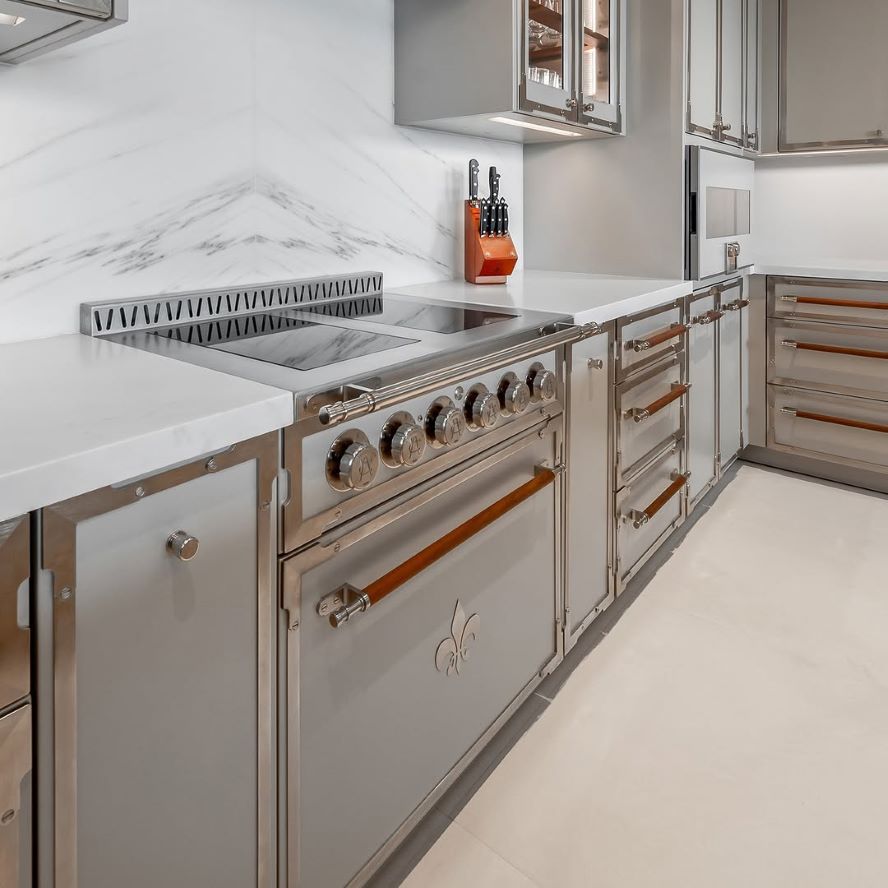
Compact appliances are designed to fit small kitchens without sacrificing essential functionality. Instead of large, space-consuming units, smaller versions like slim refrigerators, two-burner cooktops, and narrow dishwashers help maintain a balanced layout. Built-in appliances also improve visual flow by blending into cabinetry, which reduces clutter and creates a smoother appearance. Choosing appliances based on real daily use is important because many people do not require full-sized equipment in compact homes. Multi-function appliances, such as microwave-oven combinations, help save even more space by replacing multiple machines. Smaller countertop items like kettles, coffee makers, and toasters also help keep surfaces clear. This approach focuses on efficiency rather than reduction of comfort. When appliances are properly scaled to the space, movement becomes easier and the kitchen feels more organized. Compact appliances help create a clean, practical environment where every item has a purpose and nothing feels oversized or unnecessary.
Pull-Out Pantr
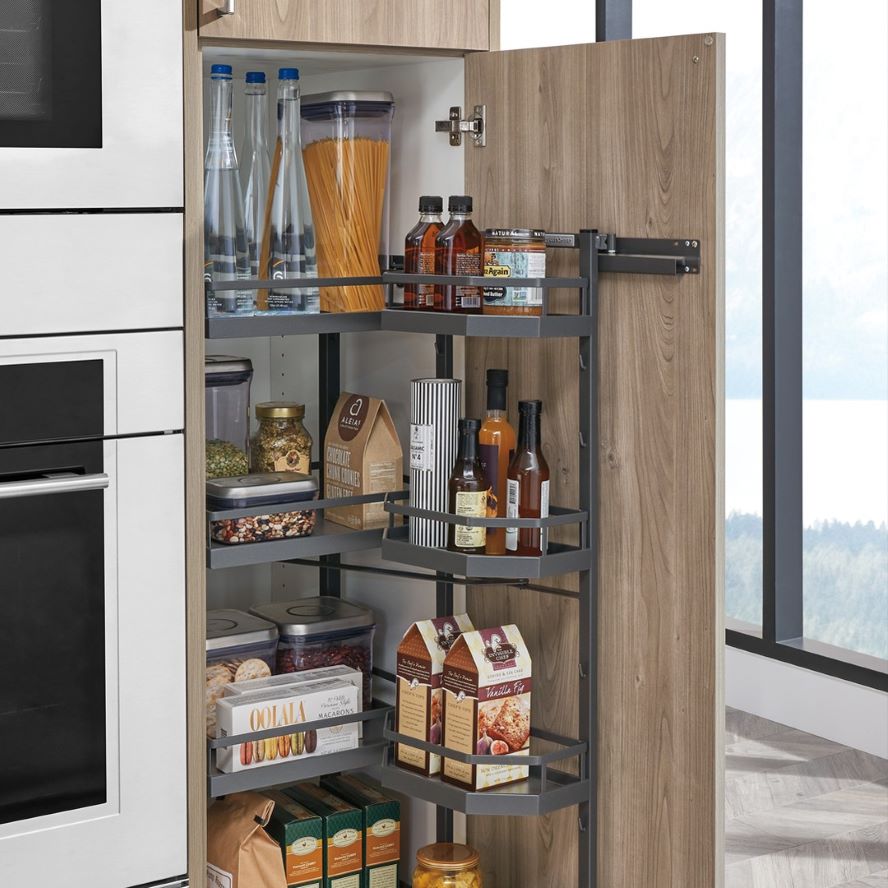
A pull-out pantry is a smart storage solution for small kitchens where traditional pantry space is limited. It uses narrow vertical gaps between cabinets or appliances and turns them into fully functional storage. When pulled out, it reveals shelves that can hold spices, canned goods, snacks, and cooking essentials in an organized way. This design makes it easier to access items that would otherwise be hidden deep inside cabinets. Adjustable shelves or wire racks help customize the space based on different storage needs. A budget-friendly DIY version can be built using sliding drawer hardware and a simple wooden frame. Clear jars and labeled containers improve organization and make items easy to find quickly. This system reduces countertop clutter because more items can be stored vertically instead of taking up surface space. Pull-out pantries are especially useful in tight kitchens where every inch matters, turning unused gaps into highly functional storage zones without changing the overall layout.
Reflective Backsplash
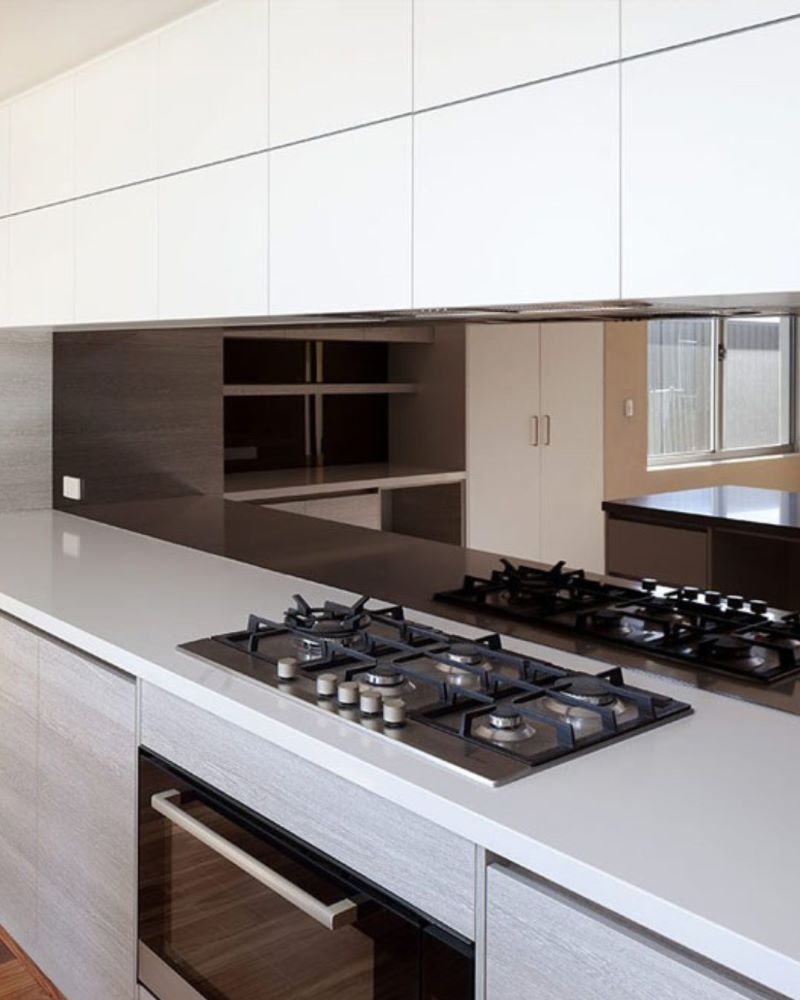
A reflective backsplash is a simple design choice that makes a small kitchen feel brighter and more open. Glossy tiles, glass panels, or polished surfaces reflect both natural and artificial light, helping distribute brightness across the room. This reduces shadows and creates the impression of more space. White subway tiles with a shiny finish are a popular budget-friendly option that still delivers strong visual impact. Mirror-like surfaces can create an even stronger reflection, but they should be used carefully to avoid too much visual distraction. Keeping grout lines thin and color-matched helps maintain a smooth, clean appearance. Reflective backsplashes are also practical because they are easy to clean and maintain. When combined with under-cabinet lighting, the effect becomes even more noticeable, especially in kitchens with limited windows. This simple upgrade improves both function and style, making the kitchen feel more open without changing its physical size.
Foldable Dining Table
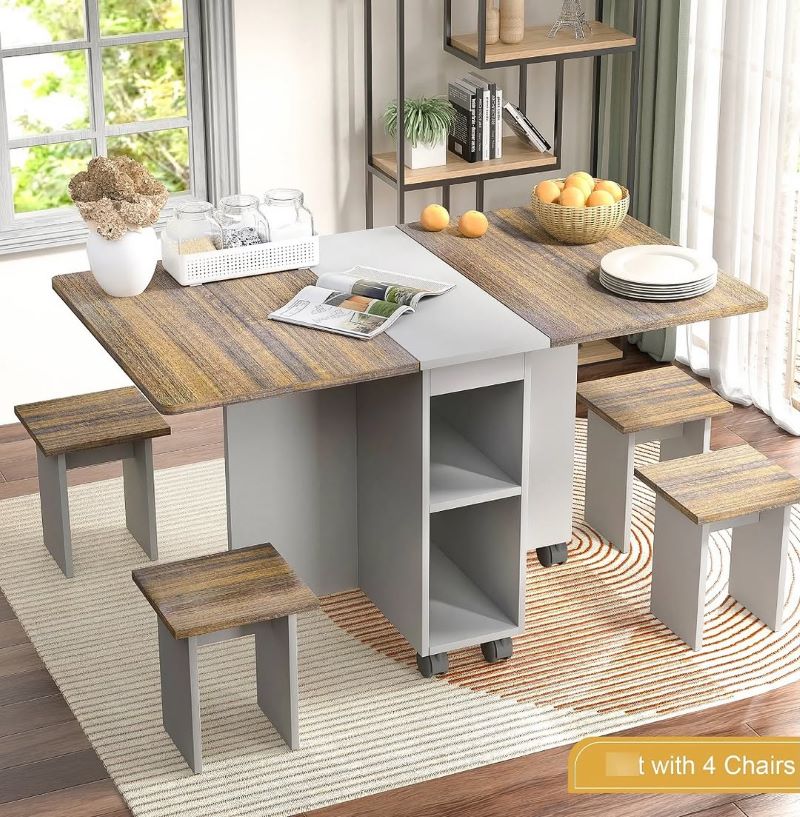
A foldable dining table is a practical solution for kitchens with limited space. It stays flat against the wall when not in use and can be opened when needed for meals or prep work. This flexibility is ideal for small apartments where permanent dining furniture would take up too much room. Wall-mounted drop-leaf tables are especially useful because they save floor space completely. Portable versions with folding legs can also be moved aside easily when not needed. A budget-friendly option is repurposing a small table or wooden board as a foldable surface. Lightweight materials like wood or laminate work well because they are easy to handle and maintain. Pairing the table with stackable or foldable chairs helps keep the area flexible and uncluttered. This setup allows the kitchen to serve multiple functions without feeling crowded. It creates a practical dining space that appears only when required, helping maintain openness in daily use.
Magnetic Wall Storage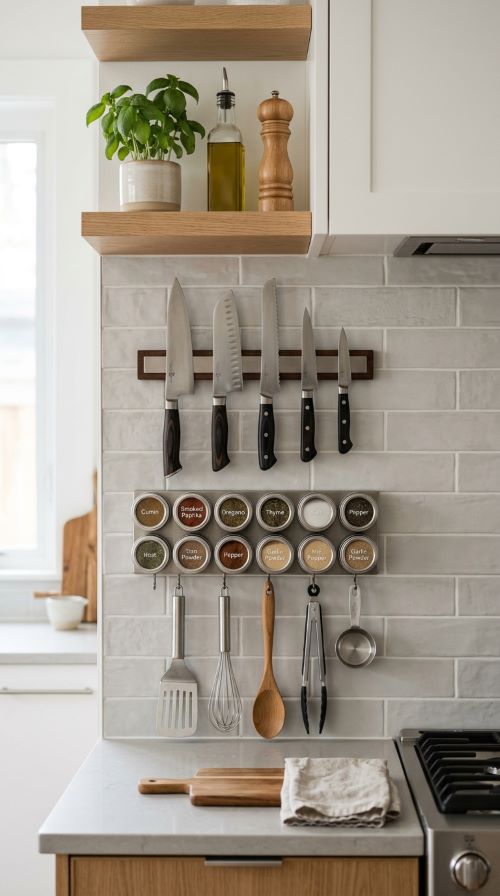
Magnetic wall storage is a space-saving solution that keeps kitchen tools visible and easy to access. A magnetic strip can hold knives securely, while small magnetic containers store spices and other essentials. This setup removes the need for bulky drawers or countertop holders, freeing up valuable space. Hooks or metal rails can also be added to hang utensils like spatulas, ladles, and measuring tools. Installing these systems near the cooking area improves efficiency because everything is within reach while preparing meals. Magnetic strips are affordable and easy to install, making them ideal for DIY setups. Keeping items neatly arranged along the wall also improves visual order, especially in small kitchens where clutter becomes noticeable quickly. It is important not to overload the strip, as keeping only frequently used items maintains both function and appearance. This system turns empty wall space into practical storage without affecting floor or counter space.
Drawer Organizers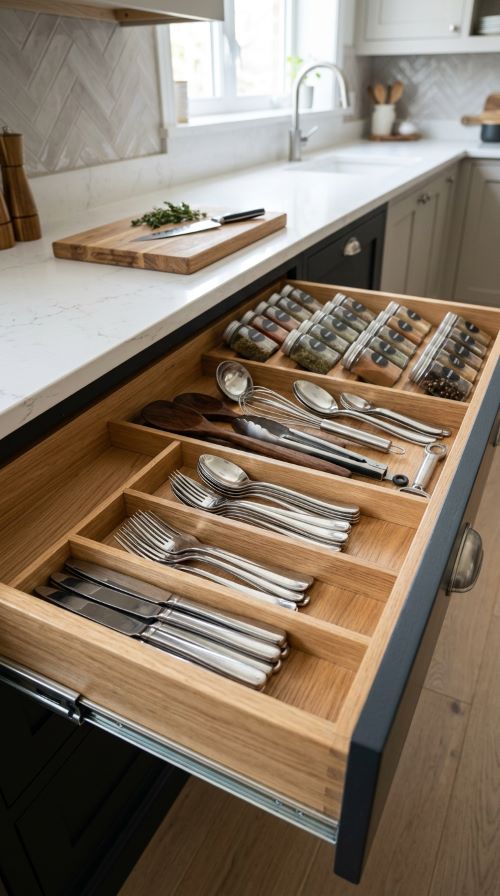
Drawer organizers help bring structure to small kitchens by dividing storage into clear sections. Without them, drawers quickly become messy and difficult to use, especially in tight spaces. Simple dividers separate cutlery, cooking tools, and small items so everything has a specific place. Expandable organizers are useful because they adjust to different drawer sizes and layouts. Materials like bamboo, plastic, or metal are commonly used and are affordable for most budgets. DIY options can also be made using cardboard or leftover wood pieces. Organized drawers reduce time spent searching for items and help keep countertops clean since everything is stored properly. Storing items vertically inside drawers can further improve space usage. Even spice storage becomes easier when jars are arranged in visible, structured rows. This small improvement makes daily kitchen tasks smoother and keeps the space feeling more controlled and less cluttered overall.
Minimal Countertop Styling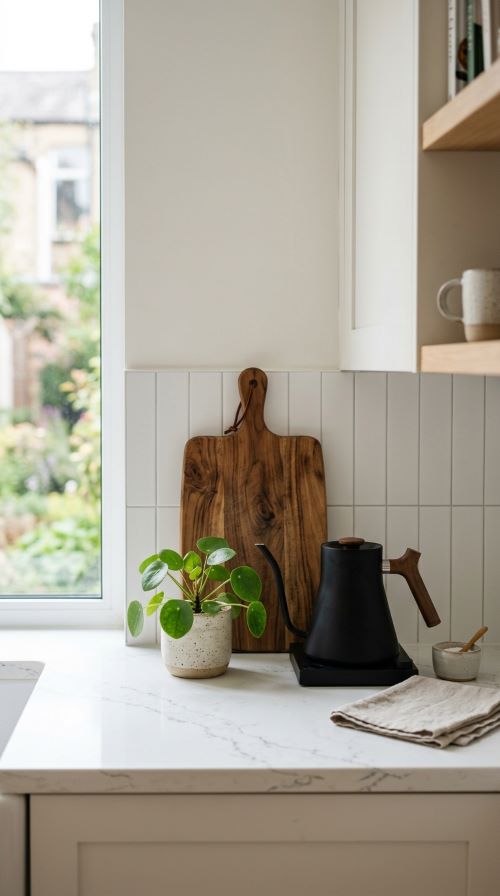
Minimal countertop styling helps small kitchens feel open and functional. When too many items are left on the counter, the space quickly feels crowded and harder to use. Keeping only essential items visible, such as a kettle or coffee maker, improves both appearance and usability. Everything else should be stored inside cabinets or drawers to maintain clear working surfaces. A wooden cutting board can remain on display because it serves both a practical and decorative purpose. Small plants or simple containers can add character without creating clutter. Avoid stacking appliances or tools on countertops, as this reduces available workspace. Clear surfaces make cleaning easier and improve daily cooking flow. This approach creates a calm and organized environment where the kitchen feels larger than it actually is. Even without changing the layout, reducing visible clutter has a strong impact on how open and refined the space appears.
Conclusion
A small kitchen can feel organized, open, and visually balanced when simple design choices are applied with care. Each idea above focuses on improving storage, lighting, or layout without requiring major renovation work or high cost. From floating shelves and compact appliances to lighting and color choices, every detail plays a role in how the space is experienced. When clutter is reduced and surfaces are kept clean, even the smallest kitchen starts to feel more comfortable and refined. With thoughtful adjustments, a compact cooking space can become highly functional while still looking stylish and well put together.